🔻🎬 WATCH THE FULL VIDEO HERE 👇

The Gold Standard of Luxury: The 20 Best Rolls-Royce Models of All Time (2026 Edition)
When we talk about the pinnacle of automotive engineering, one name sits comfortably above the rest: Rolls-Royce. For over a century, this brand has transcended the definition of a “car” to become a global metaphor for perfection. In my ten years of experience navigating the high-end automotive and real estate investment sectors, I’ve seen countless trends come and go, but the value of a Rolls-Royce remains as steady as a blue-chip stock.
Whether you are looking for a home loan to build a garage worthy of a masterpiece or considering refinancing your portfolio to acquire a piece of history, understanding which models hold their legacy is crucial. In 2026, the market for classic and modern luxury remains robust, driven by a mix of technological awe and nostalgic “Spirit of Ecstasy” charm.
Here is the definitive guide to the 20 best Rolls-Royce models of all time, reimagined for the modern collector and investor.
Rolls-Royce Corniche (1971–1995)
The Rolls-Royce Corniche is the ultimate expression of open-top opulence. Debuting in 1971, this model was the car of choice for those who viewed the French Riviera as their backyard.
Expert Insight: I’ve found that the Corniche holds its value remarkably well compared to its peers. If you are looking at the cost of entry for a vintage convertible that still feels usable in 2026, this is it. It features the legendary 6.75-liter V8 engine, delivering a smooth, “waftable” ride that modern cars struggle to replicate.
Rolls-Royce Twenty (1922–1929)
The “Twenty” was the brand’s first attempt at a “small” car—though by 1920s standards, it was still a titan. With only 2,940 units produced, it is a rare gem for serious collectors.
Financial Strategy: From an investment perspective, the Twenty is a high-barrier entry. Because customers chose their own coachbuilders, no two are identical. This uniqueness can drive pricing significantly higher at auction, especially for bodies built by renowned firms like Mulliner.
Rolls-Royce Phantom I (1925–1931)
Replacing the Silver Ghost was no small feat, but the Phantom I did so with a larger, more powerful pushrod overhead valve engine.
Market Note: Interestingly, over 1,200 of these were manufactured in Springfield, Massachusetts. For buyers in the United States, the “Springfield Phantoms” represent a unique piece of domestic history that often commands a premium in North American real estate investment circles where classic car galleries are a staple.
Rolls-Royce Phantom II (1929–1936)
The Phantom II was the last of the 40/50 hp models. It moved away from the cantilever springs of its predecessor in favor of semi-elliptical leaf springs, drastically improving handling.
Why It Matters: This car isn’t just a machine; it’s a movie star, appearing in Indiana Jones and the Last Crusade. In my experience, celebrity or cinematic provenance can increase a vehicle’s valuation by 20% to 50%.
Rolls-Royce Silver Wraith (1946–1959)
As the first post-WWII model, the Silver Wraith became the “state car” for world leaders. From the Irish President to the Brazilian Presidential fleet, this was the car of diplomacy.
The 2026 Perspective: In today’s market, a Silver Wraith is more than a car; it’s a statement of stability. If you are weighing the risk vs. reward of a mid-century classic, the Silver Wraith’s historical significance offers a “floor” to its value that few other models can claim.
Rolls-Royce Phantom III (1936–1939)
This was the only Rolls-Royce to feature a V12 engine until the late 1990s. With only 727 units made, it is the definition of “exclusive.”
The Cost of Excellence: Maintenance on a pre-war V12 is high. I often tell my clients: don’t just look at the best options for purchase; look at the cost of preservation. The Phantom III is for the collector who prioritizes engineering complexity over simple reliability.
Rolls-Royce Phantom Drophead Coupe (2007–2016)
Inspired by 1930s J-class yachts, this modern classic features teak decking and a minimalist Art Deco interior.
What This Means for You: When the first one sold for $2 million at a charity auction, it set the tone. Even in 2026, the pricing for a well-maintained Drophead remains high. It is one of the few modern cars that feels like a handcrafted heirloom rather than a mass-produced luxury product.
2007 Rolls-Royce Hyperion
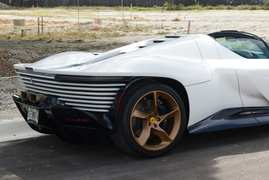
A bespoke creation commissioned by collector Roland Hall and designed by Pininfarina, the Hyperion is a one-of-one masterpiece based on the Drophead Coupe.
Investment Alert: One-off coachbuilt cars are the “Manhattan penthouses” of the car world. They don’t follow standard mortgage rates or market trends; they create their own.
Rolls-Royce Silver Ghost (1906–1926)
Often called “the best car in the world,” the Silver Ghost established the brand’s reputation for silence and reliability. Many of these 100-year-old machines still run perfectly today.
Expert Tip: If you ever have the chance to buy a Silver Ghost, invest. It is the foundation of the entire brand. I’ve seen many collectors wait for a “better deal” only to see the pricing climb another six figures the following year.
Rolls-Royce Silver Shadow (1965–1980)
The Silver Shadow brought Rolls-Royce into the modern era with unibody construction and disc brakes. It was their most successful model by volume.
Should You Buy or Wait? Currently, the Silver Shadow is one of the most accessible entry points into Rolls-Royce ownership. However, avoid the “cheap” ones. A poorly maintained Shadow can lead to a financial loss through astronomical repair bills. Buy the best one you can afford.
2003 Rolls-Royce Phantom (The BMW Era)
When BMW took the reins, many feared the soul of the brand would be lost. Instead, the 2003 Phantom was a triumph.
Case Study: I remember a client in 2018 who was torn between a new luxury SUV and a 2003 Phantom. He chose the Phantom. Today, in 2026, the SUV has depreciated by 70%, while the Phantom has begun to appreciate as a “modern classic.” Best financial strategy? Buy the icon, not the trend.
Rolls-Royce Silver Spirit (1980–1999)
The Silver Spirit introduced the retractable Spirit of Ecstasy—a safety feature that became a hallmark of luxury.
Comparison: Compared to the Silver Shadow, the Spirit is more angular and “80s chic.” It’s a fantastic choice for those who want a classic look with slightly more modern amenities.
Rolls-Royce Silver Seraph (1998–2002)
This was the first Rolls-Royce with a V12 since 1939, powered by a BMW-sourced engine. It is known for its incredible interior craftsmanship, including folding walnut picnic trays.
Financial Insight: The Seraph had a short production run (1,570 units), making it rarer than the Phantoms that followed. In the world of real estate investment and car collecting, rarity plus a V12 usually equals a solid long-term hold.
Rolls-Royce Camargue (1975–1986)
Designed by Pininfarina, the Camargue was once the most expensive production car in the world. Its styling was controversial, but its technology—like the first split-level climate control—was revolutionary.
Risk Analysis: The Camargue is a “love it or hate it” car. From a refinancing or resale perspective, your market will be smaller, but the buyers are often willing to pay a premium for its unique silhouette.
Rolls-Royce 20/25 (1929–1936)
An evolution of the “Twenty,” this model was a massive hit during the Great Depression—a testament to the brand’s resilience.
Historical Fact: About 70% of these are still on the road. If you’re looking for the best options for a pre-war car you can actually drive to brunch, the 20/25 is your best bet.
Rolls-Royce 25/30 (1936–1938)
A more powerful version of the 20/25, the 25/30 improved performance for heavier coachbuilt bodies.
Mistakes to Avoid: Many buyers confuse the 20/25 with the 25/30. Ensure you verify the engine displacement before signing any paperwork, as the 25/30’s extra power makes it much more desirable in modern traffic.
Rolls-Royce Silver Cloud (1955–1966)
To many, the Silver Cloud is the most beautiful Rolls-Royce ever made. It’s the quintessential “wedding car.”
Financial Strategy: If you are looking to diversify your portfolio, a Silver Cloud III (with the quad headlights) is a blue-chip asset. Its valuation has remained incredibly stable for decades.
Rolls-Royce Silver Spur II (1989–1993)
The Silver Spur II was the long-wheelbase version of the Spirit, featuring “Automatic Ride Control” and rows of fine leather.
Cost Breakdown: While the purchase price might seem attractive (around $35,000–$50,000 for a decent one), the cost of parts is high. Budget at least $5,000 a year for “surprises.”
Rolls-Royce Phantom VI (1968–1991)
This was the choice of Queen Elizabeth II. It is a massive, ultra-exclusive limousine that was built largely to order.
The Ultimate Flex: Owning a Phantom VI is like owning a private jet. It’s not about the mortgage rates; it’s about the presence. In 2026, these are increasingly rare on the open market.
Rolls-Royce 30 HP (1905)
The car that started it all. Only one is known to have survived (currently in Canada).
The Bottom Line: You can’t buy this one. But it represents the “North Star” for the brand. It reminds us that Rolls-Royce was founded on the idea that if a better car didn’t exist, you had to build it yourself.
What This Means for You in 2026
The luxury car market has shifted. In 2026, we see a massive divide between “disposable luxury” and “heritage luxury.” Investing in a Rolls-Royce—whether it’s a 1920s Twenty or a 2003 Phantom—is a move toward heritage.
Should You Buy, Wait, or Invest?
Buy: If you find a Silver Cloud or a 2003-2010 Phantom with a documented service history. These are currently at a “sweet spot” in pricing.
Wait: On modern electric variants if you are looking for appreciation. The first generation of any new tech usually sees a dip before it becomes a classic.
Invest: In pre-war models with unique coachwork. As the world goes digital, these mechanical masterpieces become “rolling sculpture.”
Best Financial Strategies Right Now (2026)
If you’re looking to acquire one of these legends, consider refinancing existing high-interest debt to free up capital. With mortgage rates stabilizing in early 2026, many of my clients are using home equity to fund passion investments that have a history of outperforming the S&P 500 over 20-year cycles.
Mistakes to Avoid That Could Cost You Money
Skipping the PPI (Pre-Purchase Inspection): A “cheap” Rolls-Royce is the most expensive thing you will ever own.
Ignoring Provenance: A car with a known history, original manuals, and tool kits will always sell for 20% more.
Failing to Insure Properly: Standard insurance won’t cover the true replacement value of a classic Rolls. Look for “Agreed Value” policies.
Take the Next Step
The road to owning “the best car in the world” starts with research. Whether you’re looking for a home loan to build your dream garage or ready to compare options for your next big acquisition, the time to act is when the right car meets the right strategy.
Ready to explore the finest options in the luxury market? Compare the latest rates and investment opportunities today.