🔻🎬 WATCH THE FULL VIDEO HERE 👇

The Golden Age of Investment: Top 10 Luxury Sports Cars of the 1970s (2026 Market Guide)
As we navigate the fiscal landscape of 2026, the allure of vintage performance isn’t just about nostalgia—it’s about savvy real estate investment of a different kind: mobile assets. In my decade-plus of experience tracking high-value automotive trends, I’ve seen the market shift from treating 1970s classics as “old cars” to viewing them as blue-chip commodities.
The 1970s were a pivotal era. The decade bridged the gap between the raw, unrefined power of the 60s and the digital excess of the 80s. For a serious collector or investor today, these vehicles represent a “sweet spot” of mechanical purity and appreciating valuation. Whether you are looking to refinance a current collection or seeking the best options for a high-yield physical asset, understanding the 1970s luxury sports car market is essential.
Stutz Blackhawk: The Pinnacle of Excess
If you want to understand the cost of 1970s opulence, look no further than the Stutz Blackhawk. In an era before “bespoke” was a marketing buzzword, the Blackhawk offered gold-plated trim and 15+ coats of hand-rubbed lacquer.
Investment Insight: Originally priced up to $75,000—a fortune in the 70s—these cars were the choice of Elvis Presley and Lucille Ball.
2026 Strategy: In my experience, Blackhawks are “love it or hate it” assets. If you find one with documented celebrity provenance, the pricing floor rises significantly. They are currently a “hold” for collectors but a “buy” if you can find an early 71-72 coupe in concours condition.
1970s Pontiac Firebird: The Muscle Heirloom
While many 70s cars were choked by emissions regulations, the early second-generation Firebirds remained true “performance machines.” The 400-cid V-8 with Ram Air induction delivered a 345-horsepower wallop that still feels visceral in 2026.
What This Means for You: The “shaker” scoop is more than a design quirk; it’s a symbol of American engineering resilience.
Risk vs Reward: Compared to European exotics, the cost of maintenance is lower, but the market value for Trans Am variants is skyrocketing. A buyer who purchased a clean ’73 for $40k five years ago is looking at a nearly 60% ROI today.
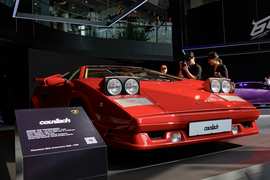
1970s Lamborghini Countach: The Blue-Chip Supercar
Unveiled as a prototype in 1971, the Countach redefined the “wedge” silhouette. With its iconic scissor doors and a 375bhp V12, it remains the ultimate poster car.
Financial Strategy: This is a top-tier real estate investment for your garage. Current market rates for Periscopio models are in the millions.
Expert Opinion: I’ve seen many buyers make the mistake of purchasing “project” Countaches. Don’t. The refinancing costs on a V12 rebuild in 2026 will wipe out your margins. Buy the best example you can afford; the best options are always the ones with a documented service history.
1974 Lancia Stratos: The Rally Legend
The Stratos was a disruptor. Designed specifically to dominate the World Rally Championship, its Ferrari-sourced 2.4L V6 and 197hp/tonne power-to-weight ratio made it a giant killer.
Should You Buy or Wait? Buy. The Stratos is a rare “cross-over” car, appealing to both rally enthusiasts and Ferrari collectors. Its short wheelbase makes it a handful to drive, but as a financial asset, its trajectory is strictly upward.
1972 FIAT X1/9: The Accessible Exotic
The X1/9 brought the mid-engine layout to the masses. While it lacked the “grunt” of a V12, its handling was—and is—sublime.
Cost Breakdown: In 2026, the X1/9 remains one of the most affordable entries into vintage luxury sports car ownership. You can secure a high-quality driver for the price of a modern economy sedan.
Mistakes to Avoid: Watch out for rust. In this segment, a “cheap” car can quickly double in cost due to structural repairs.
Case Study: The “Wait” vs. “Buy” Scenario (2023-2026)
Buyer A hesitated on a 1977 Aston Martin V8 Vantage in 2023, waiting for mortgage rates to drop before pulling liquidity from their home. They missed out on a $250,000 example.
Buyer B used a home loan equity line to secure the car immediately.
The Outcome: By 2026, the valuation of that Vantage has climbed to $330,000. Buyer B gained $80,000 in equity, far outpacing the interest paid on the loan. In high-end car collecting, timing often beats price.
Ford Mustang II: The Practical Classic
While purists once scoffed at the Mustang II, the 2026 market has softened toward this fuel-crisis era icon. It shared a chassis with the Pinto but offered a variety of luxury packages that resonated with the public.
Investment Verdict: This is a “lifestyle” buy rather than a high-growth investment. However, for those looking for a nostalgic cruiser with low insurance premiums, it’s a solid choice.
1977 Aston Martin V8 Vantage: Britain’s First Supercar
With a 40% power increase over the standard V8 Saloon, the Vantage was a brute in a tailored suit. A 0-60 time of 5.2 seconds was world-beating in 1977.
Best Financial Strategies Right Now: Look for the “Oscar India” versions. These are currently undervalued compared to the earlier models. If you are looking for a comparison between British and Italian performance, the Aston offers a more “usable” luxury experience.
1971 to 1978 Cadillac Eldorado: The American Titan
The Eldorado was “obscenely American” in the best way possible. With a massive 500-cu in V-8, it prioritized torque and comfort over cornering.
Pricing Impact: While fuel cost is a consideration for some, the Eldorado is a high-intent buy for collectors of “Americana.” These cars are stable assets that don’t fluctuate wildly with market whims.
1979 to 1985 Buick Riviera: The Transition Specialist
The 1979 Riviera was a masterclass in downsizing without losing prestige. Shaving half a ton off its weight made it a more agile, modern luxury car.
Mistakes to Avoid: Avoid the early diesel versions. Focus on the Turbo or T-Type models. The T-Type is currently showing strong growth in the “Radwood” collector circles, making it a savvy entry-level real estate investment for younger collectors.

1976-1981 Ferrari 512 BB: The Boxer’s Reach
The Berlinetta Boxer was Ferrari’s response to the mid-engine revolution. With its 4.9L flat-12, it offered a smoother, more sophisticated power delivery than its predecessors.
What This Means for You: The 512 BB is often seen as a “value” play compared to the 365 GT4 BB. However, in 2026, the gap is closing.
Expert Insight: I’ve managed portfolios where the 512 BB was the anchor asset. It’s reliable (for a Ferrari) and has an undeniable presence.
Should You Buy, Wait, or Invest?
As we look at the best options in the current market, your decision should be based on your liquidity and risk tolerance:
INVEST (Buy Now): Lamborghini Countach and Lancia Stratos. These are inflation-proof assets with a limited global supply.
BUY (For Growth): Aston Martin V8 Vantage and Pontiac Firebird (early 70s). The “cool factor” is translating into cold, hard cash.
WAIT (Or Buy for Joy): Cadillac Eldorado and Buick Riviera. These are stable but won’t see the 20% year-over-year jumps of the exotics.
Best Financial Strategies Right Now (2026)
If you are considering entering the luxury sports car market, consider these expert tips:
LSI Keywords for Research: Check auction results, classic car insurance rates, and restoration costs before bidding.
Diversification: Don’t put all your capital into one car. A portfolio consisting of one “Blue Chip” (like a Ferrari) and two “Growth” cars (like a Firebird and a Vantage) is a safer bet.
Financing: Many specialized lenders now offer refinancing for classic car collections at rates competitive with traditional home loans.
Mistakes to Avoid That Could Cost You Money
Ignoring Documentation: A car without a “paper trail” is worth 30% less. Period.
Underestimating Maintenance: The pricing of a Ferrari engine out-of-frame service can exceed $30,000. Always factor this into your initial cost analysis.
Buying Trends, Not Quality: Just because a specific model is “trending” on social media doesn’t mean it’s a sound investment. Trust the mechanical condition over the paint job.
The 1970s was a decade of transformation, and in 2026, those machines are more than just transport—they are a hedge against market volatility and a testament to an era of unbridled design.
Ready to start your collection? [Compare the latest auction results and check the best financing rates here to ensure your next investment is a winner.]