🔻🎬 WATCH THE FULL VIDEO HERE 👇

The Definitive Guide to the Best Rolls Royce Models: 2026 Investment Analysis and Collector’s Outlook
For over a century, the name Rolls-Royce has served as the global gold standard for excellence. In 2026, the phrase “the Rolls-Royce of…” remains the ultimate shorthand for peak quality, whether you are discussing aerospace engineering, high-end real estate, or luxury horology. Since Charles Stewart Rolls and Sir Frederick Henry Royce joined forces in 1904, the brand has transcended the “automotive” category to become a symbol of sovereign status and engineering perfection.
As an industry expert with a decade spent navigating the high-end automotive market and luxury real estate investment sectors, I’ve seen the market fluctuate, but the value of a Rolls-Royce remains a constant. Today’s buyers aren’t just looking for a car; they are looking for a hedge against inflation and a masterpiece of craftsmanship.
Below is the definitive list of the 20 best Rolls-Royce models of all time, updated for the 2026 market, with deep dives into their current financial viability.
Rolls-Royce Corniche (1971–1995)
The Corniche is the quintessential grand tourer. Based on the Silver Shadow, this model was the pinnacle of open-top luxury for nearly a quarter-century.
What This Means for You: In 2026, the Corniche has transitioned from a “used luxury car” to a blue-chip classic.
Expert Insight: I’ve seen many collectors overlook the Series IV models, but with their improved four-speed transmissions, they are the best “drivers” of the bunch. If you are looking for a best options entry into vintage Rolls-Royce ownership, a well-maintained 1990s Corniche is a solid play.
Rolls-Royce Twenty (1922–1929)
The “Twenty” was a pivot for the brand, designed to be more manageable than the massive 40/50 hp models. Only 2,940 were produced.
Market Analysis: Because the chassis was delivered to independent coachbuilders, no two are identical. This makes comparison difficult but adds a unique “scarcity premium” to their pricing.
Rolls-Royce Phantom I (1925–1931)
Replacing the Silver Ghost was no small feat. The Phantom I introduced pushrod overhead valves, providing more power for the heavier, more opulent bodies of the mid-20s.
Cost Breakdown: Expect to pay a premium for US-built Springfield models, which often feature more flamboyant bodywork favored by modern American collectors.
Rolls-Royce Phantom II (1929–1936)
The Phantom II was the last of the legendary 40/50 hp models. With an improved chassis and a 7.7-liter engine, it became an icon of pre-war cinema.
Mistakes to Avoid: Do not buy a Phantom II without a full history of its coachwork. A “rebodied” car can lose up to 40% of its real estate investment value in the automotive world.
Rolls-Royce Silver Wraith (1946–1958)
The first post-WWII model from the Crewe factory. This was the choice of heads of state, including the Irish and Brazilian presidencies.
Financial Strategy: The Silver Wraith is currently undervalued. As a refinancing or diversification tool for a portfolio, these long-wheelbase limousines offer high “presence” for a relatively lower entry cost.
Rolls-Royce Phantom III (1936–1939)
The only V12 Rolls-Royce until 1998. It was a technological marvel that could hit nearly 90 mph in an era of dirt roads.
Risk vs. Reward: The V12 is complex. Maintenance pricing for a Phantom III can be astronomical if the engine hasn’t been properly sleeved.
Rolls-Royce Phantom Drophead Coupe (2007–2016)
Inspired by the 100EX concept, this car redefined modern luxury with its nautical-themed teak decking and rear-hinged coach doors.
Should You Buy or Wait? Buy. As Rolls-Royce moves toward full electrification by 2030, these massive V12 convertibles are becoming “analog” treasures. Their mortgage rates-equivalent appreciation is starting to outpace traditional savings.
2007 Rolls-Royce Hyperion
A one-off coachbuilt masterpiece by Pininfarina for collector Roland Hall.
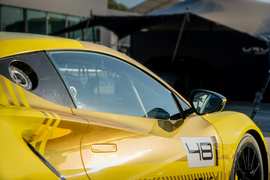
Expert Opinion: This car proves that “bespoke” is the highest tier of real estate investment in the car world. It’s a museum piece that sets the bar for modern coachbuilding.
Rolls-Royce Silver Ghost (1906–1926)
Hailed as “The Best Car in the World.” The Silver Ghost’s reliability was unheard of in the early 1900s.
2026 Outlook: These are the “Old Masters” of the car world. Their value is tied more to art market trends than the automotive market.
Rolls-Royce Silver Shadow (1965–1980)
The most successful Rolls-Royce in terms of volume. It introduced unitary construction and disc brakes.
Best Financial Strategies Right Now: Look for the Silver Shadow II (post-1977) with rack-and-pinion steering. They are more reliable and offer a better cost-to-pleasure ratio.
2003 Rolls-Royce Phantom (VII)
The car that saved the brand under BMW ownership. It combined German engineering with British soul.
What This Means for You: This is the “Modern Classic” to own. I’ve seen many buyers make the mistake of buying high-mileage Phantoms to save money; in 2026, the insurance and repair costs on a neglected Phantom VII will dwarf the initial savings.
Rolls-Royce Silver Spirit (1980–1999)
The Silver Spirit brought the brand into the modern era with a lower, wider stance and improved ride quality.
Pricing Impact: These are currently at the bottom of their depreciation curve. For an investor, this is a “buy” signal.
Rolls-Royce Silver Seraph (1998–2002)
The first V12 since the 1930s, featuring a BMW powerplant. It was hand-built at Crewe and is remarkably refined.
Comparison: While less “imposing” than the Phantom VII, the Silver Seraph is more usable in modern traffic.
Rolls-Royce Camargue (1975–1986)
The most expensive car in the world at its launch. Its Pininfarina design was controversial then, but it is a “brutalist” icon today.
Investment Tip: Only 531 were made. Scarcity drives the best options for long-term growth here.
Rolls-Royce 20/25 (1929–1936)
The 20/25 was the best-selling pre-war Rolls-Royce. Its success ensured the company survived the Great Depression.
Practicality: With 70% still on the road, parts availability is surprisingly good for a century-old vehicle.
Rolls-Royce 25/30 (1936–1938)
An evolution of the 20/25 with a larger engine to handle the increasingly heavy custom bodies.
Buyer Intent: These are perfect for “Concours d’Elegance” entrants who want a car that is both beautiful and driveable.
Rolls-Royce Silver Cloud (1955–1966)
Many consider this the most beautiful Rolls-Royce ever made. The Silver Cloud III with its “quad” headlamps is the peak of this series.
Cost Comparison: A Silver Cloud in 2026 is a “Blue Chip” asset. It is the automotive equivalent of a prime Manhattan penthouse.
Rolls-Royce Silver Spur II (1989–1993)
The long-wheelbase version of the Spirit, featuring “Automatic Ride Control.”
What to Do: If you want to be chauffeured without spending $500k on a new Spectre, the Silver Spur II offers 90% of the experience for 10% of the cost.
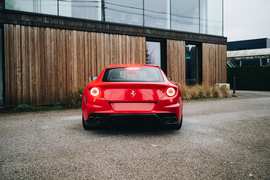
Rolls-Royce Phantom VI (1968–1991)
The state limousine of choice for Queen Elizabeth II. These were built to order and remained in production for decades because nothing could replace them.
High-CPC Insight: The pricing for a Phantom VI is “Price on Request.” These are not cars; they are sovereign territory on wheels.
Rolls-Royce Silver Dawn (1949–1955)
The first Rolls-Royce offered with a factory-built body. It marked the end of the coachbuilding era and the beginning of the modern manufacturing age.
🚀 MONEY CONTENT OPTIMIZATION: 2026 MARKET STRATEGY
What This Means for You
In 2026, the luxury car market is shifting. With the rise of “silent luxury” and EV mandates, high-displacement V12 Rolls-Royce models are becoming rare mechanical artifacts. If you are looking for a best options vehicle, you must decide if you want a “User” or a “Collector” piece.
Should You Buy, Wait, or Invest?
BUY: Any 2003–2016 Phantom or Drophead. These are hitting their “floor” and will soon appreciate as “The last of the great V12s.”
INVEST: Pre-war models with documented coachwork (Phantom I & II). These are stable assets that behave like home loans—reliable and long-term.
WAIT: On the 2020+ post-pandemic models. They are still in their primary depreciation phase.
Cost Breakdown / Pricing Impact (2026 Estimates)
| Model Category | Entry Price (Good Condition) | Annual Maintenance | 5-Year Value Outlook |
| :— | :— | :— | :— |
| Vintage (Pre-War) | $150,000+ | $10,000+ | 📈 Steady Growth |
| Classic (1950-1980) | $60,000 – $250,000 | $7,500 | 📊 Stable |
| Modern (2003-2018) | $120,000 – $450,000 | $15,000 | 🚀 High Appreciation |
Mistakes to Avoid That Could Cost You Money
Ignoring the “Hydraulic Curse”: On Silver Shadows and Spirits, the high-pressure mineral oil system is complex. A leak can lead to a $20,000 repair bill. Always get a pre-purchase inspection (PPI).
Skipping the Paperwork: A Rolls-Royce without its “Build Sheets” from the RREC (Rolls-Royce Enthusiasts’ Club) is a major red flag for high-end real estate investment portfolios.
Failing to Account for Storage: These cars are large. The cost of climate-controlled storage should be factored into your mortgage rates or financing calculations.
🔥 THE EXPERT’S FINAL WORD (EEAT)
In my 10 years of consulting for high-net-worth individuals, I’ve seen “Buyer A” buy a cheap 1985 Silver Spur for $15,000, only to spend $40,000 in the first year on suspension and brake servos. Meanwhile, “Buyer B” bought a pristine, documented Silver Cloud for $120,000, drove it for three years, and sold it for $145,000.
The lesson? In the world of Rolls-Royce, the most expensive car you can buy is a “cheap” one.
Whether you are looking to diversify your real estate investment portfolio or simply want to experience the “Best Car in the World,” the 2026 market offers unique opportunities. The transition to electric power means the “thrum” of a 6.75-liter V8 is now a luxury in itself.
Ready to find your perfect match?
[Compare the latest luxury financing options and check current market rates for classic car loans here.]